Ged
Ged, born Duny in the mountain village of Ten Alders on the island of Gont, is the central figure of Ursula K. Le Guin's A Wizard of Earthsea. His life traces a classic arc of the mageborn: from a neglected, wild child who discovers his innate power through a witch's teaching, to a proud and impatient student at the School for Wizards on Roke, to a young man who looses a terrible shadow upon the world through his own arrogance. His subsequent journey—to hunt that shadow across land and sea, to face dragons and the temptations of ancient powers, and finally to meet his enemy in a confrontation that redefines the nature of good and evil—is the story of his education not merely in magic, but in the true meaning of selfhood, balance, and responsibility.
Identity and Background
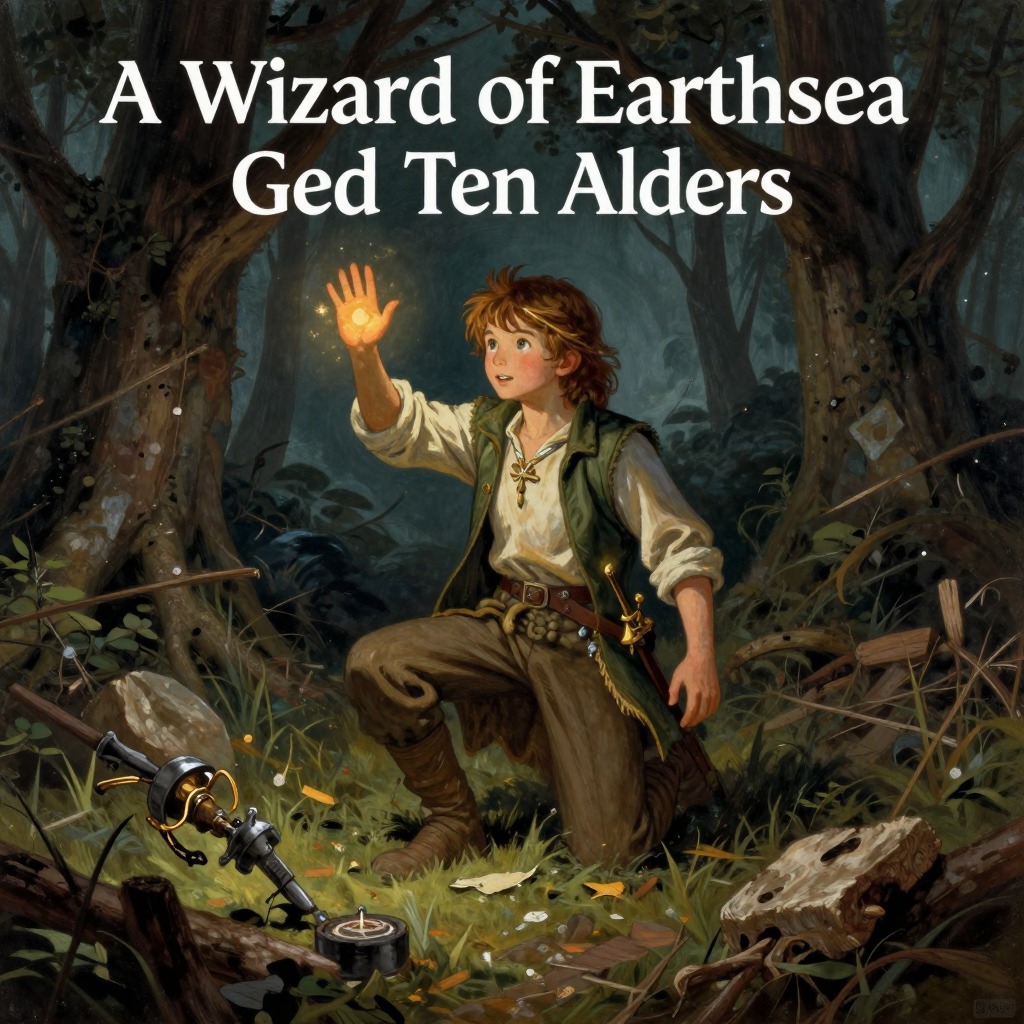
Ged was born in the lonely village of Ten Alders, high on the mountain of Gont, to a grim, unspeaking father who was the village bronze-smith and a mother who died before he was a year old. He grew up wild, a "thriving weed," loud, proud, and full of temper, herding goats and roaming the forests and cliffs. His first name, Duny, was given him by his mother. At age seven, he overheard his aunt, the village witch, calling goats with a rhyme and, repeating it without understanding, accidentally spellbound the entire herd. The witch, seeing his innate power, took him as her prentice. She taught him the true name of the falcon, and he soon learned to summon birds of prey, earning the use-name "Sparrowhawk" from the other children. He learned from her all her lore in herbals, healing, finding, binding, and the words of the True Speech, as well as various tricks of Illusion from wandering weatherworkers and jugglers. At thirteen, after he saved his village from a Kargish raid by weaving a fog of concealment, the great mage Ogion the Silent came to him, gave him his true name—Ged—in a ceremony at the cold springs of the River Ar, and took him as his prentice.
Life and Plot Trajectory
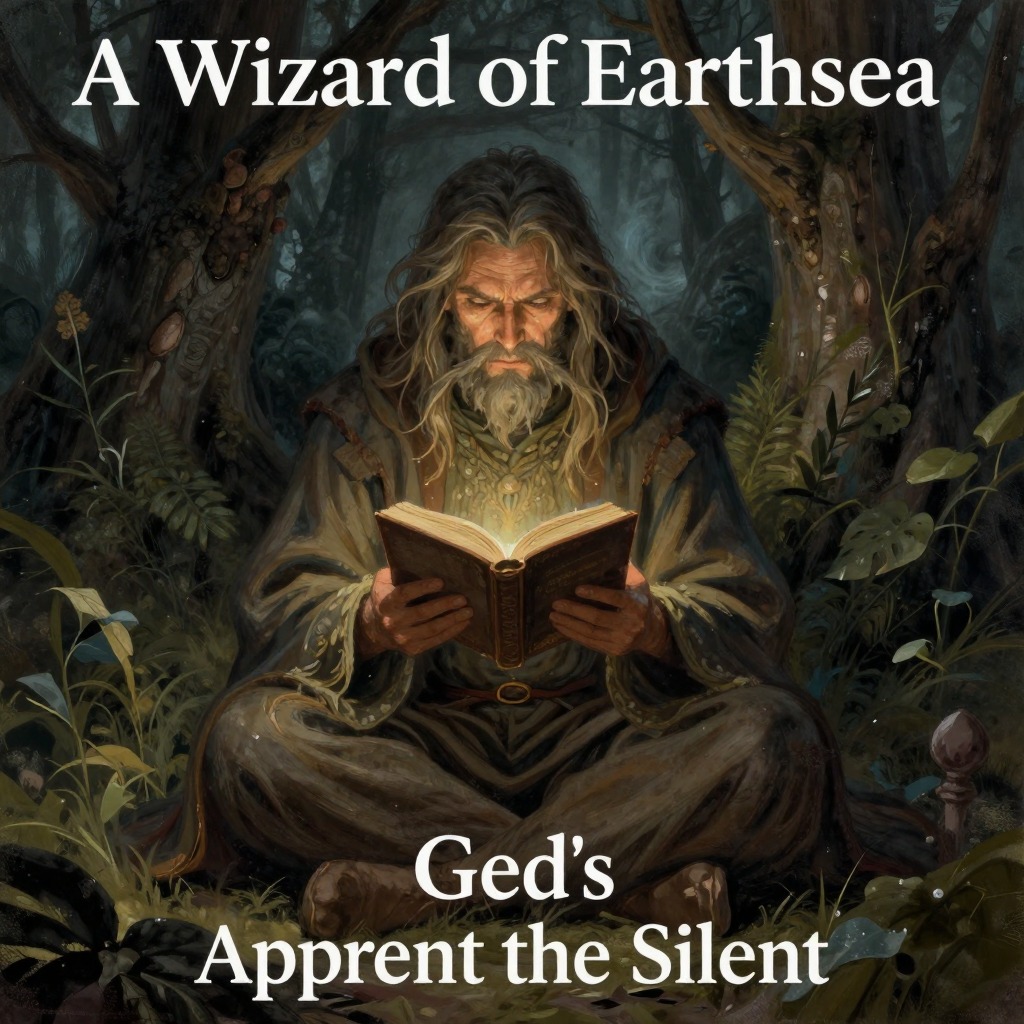
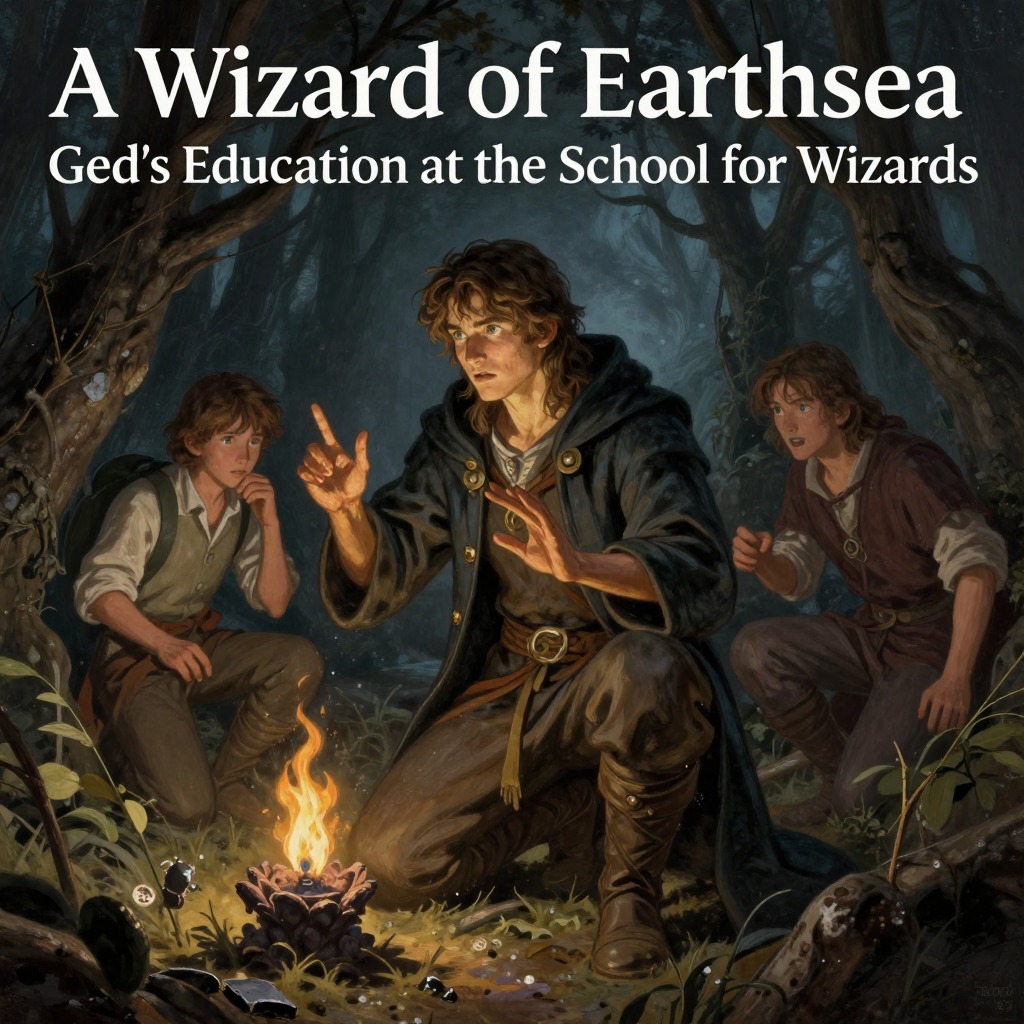
Ged's apprenticeship with Ogion was a trial of patience. He had expected to enter at once into the mystery of power, but Ogion taught him silence, the names of plants, and the Six Hundred Runes of Hardic, refusing to work even simple weather spells. Frustrated, Ged chose to leave Ogion and go to the School for Wizards on Roke Island. There, his quickness and power made him both admired and resented, particularly by the older, aristocratic student Jasper. His pride led him to accept Jasper's challenge to a duel of sorcery on Roke Knoll, where he attempted to summon the spirit of the legendary lady Elfarran from the dead. The spell went catastrophically wrong: a shapeless, headless shadow-beast, a creature of unlife, burst through the breach and attacked him. The Archmage Nemmerle drove the shadow off but spent all his power in the act, dying soon after. Ged was left scarred, weakened, and haunted by the shadow, which he had loosed into the world. After a long recovery, he was made a wizard and sent to the remote township of Low Torning in the Ninety Isles, where he faced the dragon Yevaud of Pendor. By learning the dragon's true name from old lore, he forced Yevaud to swear never to attack the Archipelago. But the shadow continued to pursue him, and he fled across the seas, first to Osskil, where he was tempted by the Lady Serret and the Old Power of the Terrenon stone, and then, transformed into a hawk, back to Gont and his old master Ogion. Following Ogion's counsel to "turn around" and hunt the hunter, Ged set out on a deliberate quest across the Open Sea, finally confronting the shadow in a place beyond the world, where he spoke its name—and found it was his own.
Key Actions and Objectives
Ged's early actions are driven by a desire for power, glory, and recognition. He saves his village from the Kargs by weaving a fog, but his primary motivation is to prove himself. At Roke, his rivalry with Jasper leads him to break the school's law against duels and to attempt a forbidden summoning spell, an act of catastrophic pride. His objective then shifts to survival and, later, to atonement. He defeats the dragon Yevaud not by force but by knowledge, bargaining with the dragon's true name. His central quest becomes the hunting and mastering of the shadow he loosed. This culminates in his final, deliberate act: sailing to the edge of the world, entering the Dry Land, and facing the shadow. There, he does not destroy it but names it, speaking the word "Ged" in unison with it, and reaches out to embrace it, integrating it into himself.
Relationships and Conflict
Ged's most significant relationships are with his mentors and his rival. Ogion, his first true master, teaches him the value of silence and patience, and his counsel to "turn around" and hunt the hunter is the key to Ged's ultimate victory. At Roke, the Archmage Nemmerle sacrifices his life to save Ged from the shadow, a debt that shapes Ged's sense of responsibility. His friendship with Vetch, a fellow student from the East Reach, is a constant source of loyalty and trust; Vetch gives Ged his true name as a proof of unshakable faith, and later accompanies him on the final voyage. His conflict with Jasper, born of pride and envy, is the immediate cause of the disaster on Roke Knoll. The central conflict, however, is with the shadow itself, which is revealed to be not an external enemy but the embodiment of Ged's own arrogance, ignorance, and dark potential. His encounters with the dragon Yevaud and the temptress Serret test his wisdom and resolve, teaching him that power must serve knowledge and that evil cannot be fought with its own means.
Change and Ending
Ged's journey is one of profound transformation. He begins as a boastful, impatient boy, certain of his own superiority. The loosing of the shadow humbles him, leaving him scarred, stammering, and filled with shame. His flight from the shadow is a period of fear and weakness, but his decision to turn and hunt it marks a turning point. The final confrontation on the Open Sea is not a battle but an act of recognition and integration. By naming the shadow with his own name, Ged accepts it as part of himself. He emerges from the experience whole, free, and healed. The novel ends with him and Vetch sailing home, Ged laughing and weeping, having achieved a new kind of mastery: not power over others, but knowledge and acceptance of his own complete self.
Narrative Role and Evaluation
Ged is a classic hero of fantasy, but his heroism is defined not by martial prowess or the defeat of external foes, but by psychological and moral growth. He is a "round" character in E. M. Forster's sense, capable of surprising the reader convincingly. His story follows the pattern of the hero's journey, but subverts it by making the ultimate enemy a part of the self. The narrative traces his individuation, in Jungian terms, as he confronts and integrates his shadow. His journey is also a philosophical one, exploring themes of balance, equilibrium, and the nature of true power. Ged's ultimate victory is not the destruction of evil but the achievement of wholeness, a lesson that resonates far beyond the confines of the fantasy genre. He is the first of Le Guin's great Earthsea characters, and his story sets the thematic and moral foundation for the entire cycle.